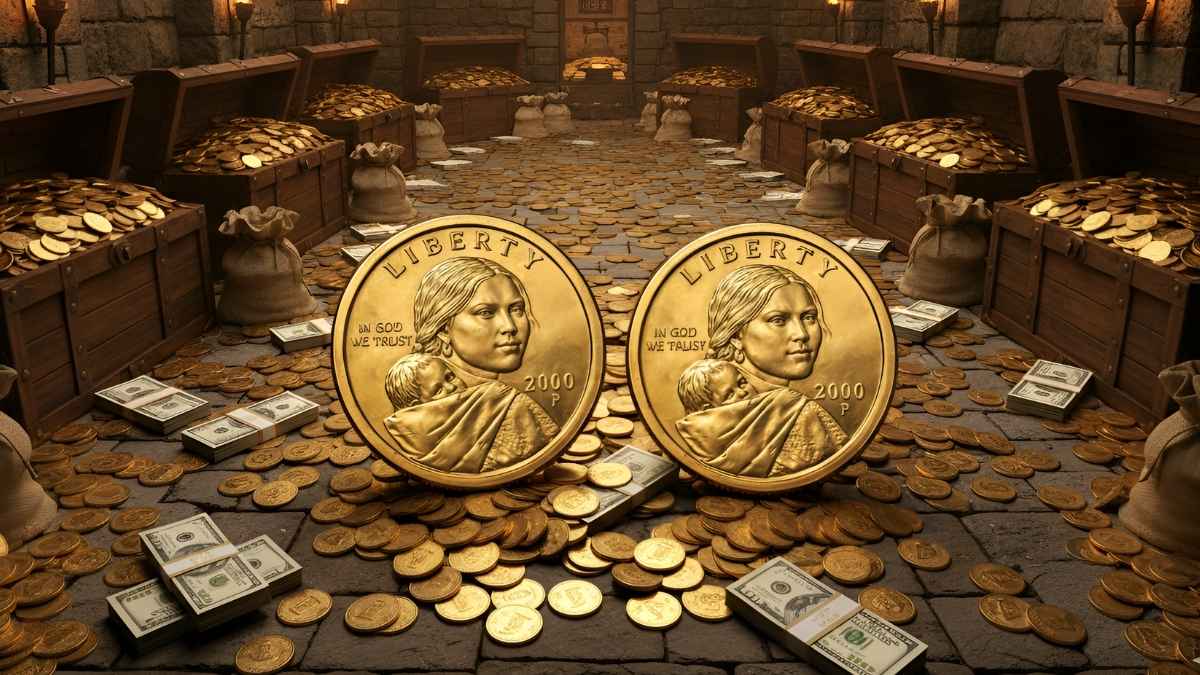
Coin Collecting 2026: The Sacagawea Dollar was first introduced in 2000 to honor Sacagawea, the Shoshone woman who guided the Lewis and Clark expedition. Struck in a golden-colored manganese brass alloy, the coin was designed to circulate widely but quickly became more popular among collectors. Over the years, rare varieties and minting errors have transformed certain Sacagawea Dollars into highly valuable treasures.
Cheerios Dollar (2000)
One of the most famous varieties, the Cheerios Dollar was distributed in cereal boxes as part of a promotion. These coins feature a prototype reverse with enhanced tail feather details. Values can reach $5,000 or more depending on condition.
Mule Error (2000)
This dramatic error features a Sacagawea Dollar obverse paired with a Washington Quarter reverse. Extremely rare, examples have sold for over $100,000, making it one of the most valuable modern coin errors.
2000 Wide Rim Variety
Some early Sacagawea Dollars were struck with a wider rim, creating a distinct variety. Collectors prize these coins, with values ranging from $50 to several hundred dollars in mint state.
2000 Proof Coins
Proof versions struck in San Francisco with mirrorlike finishes are highly collectible. Cameo examples can fetch strong premiums, especially in high grades.
2001 Proof Issues
Low mintage proof coins from 2001 remain desirable among collectors, with values ranging from $20 to $100 depending on condition.
2007 Missing Edge Lettering
Although primarily associated with the Presidential Dollar series, some Sacagawea coins struck during this period share similar edge lettering errors. Missing inscriptions can make these coins worth hundreds.
2009 Native American Reverse Designs
The U.S. Mint introduced new reverse designs in 2009 to honor Native American contributions. Certain varieties and errors from this series are highly collectible.
2010 to 2015 Special Issues
Coins featuring unique reverse designs during these years often attract collector interest. Proof and mint set versions are especially valuable.
2016 Enhanced Uncirculated Set
Sacagawea Dollars included in the 2016 Enhanced Uncirculated Set are prized for their sharp details and distinctive finish. Values can reach $50 to $200.
2018 Proof Issues
Low mintage proof coins from 2018 remain desirable, with cameo examples commanding strong premiums.
2020 Native American Dollar
Special reverse designs introduced in 2020 highlight Native American achievements. Certain varieties and mint errors are highly collectible.
2022 Proof Issues
Proof coins from 2022 continue to attract attention, especially in high grades. Values range from $20 to $100.
2024 Native American Dollar
Recent issues with unique reverse designs are already gaining collector interest. Rare varieties and errors can push values higher.
Collector Insights in 2026
Collectors emphasize condition, rarity, and certification when evaluating Sacagawea Dollars. Coins graded MS65 or higher, proof issues, and dramatic errors such as the Mule variety remain highly sought after. Auction houses continue to report strong prices for certified examples, and the series has become a cornerstone of modern numismatics.
Tips for Identifying Valuable Sacagawea Dollars
- Check Reverse Designs: Look for enhanced tail feather details or unique Native American themes.
- Inspect for Errors: Doubling, missing edge lettering, and mismatched designs can add significant value.
- Evaluate Condition: Coins with sharp details and original luster are worth far more than worn examples.
- Seek Professional Grading: Certification adds credibility and ensures accurate valuation.
Conclusion
The Sacagawea Dollar series proves that modern coins can hold extraordinary value. From Cheerios Dollars and Mule Errors to proof issues and special reverse designs, collectors in 2026 continue to treasure these coins as hidden fortunes. For enthusiasts and investors alike, Sacagawea Dollars represent both historical significance and financial potential, making them timeless treasures in the world of numismatics.