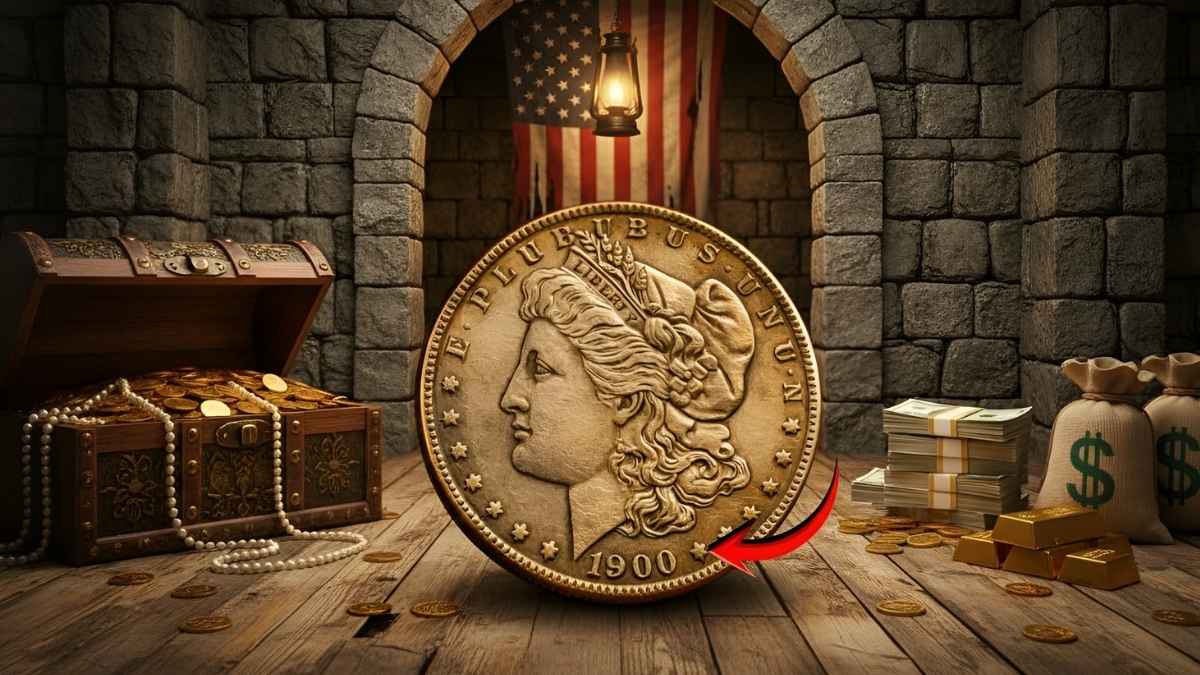
1900 Morgan Silver Dollar Value Guide: The Morgan silver dollar is one of the most iconic coins in American numismatics. Struck between 1878 and 1921, it represents a fascinating era of U.S. history, blending artistry with economic significance. The 1900 Morgan silver dollar, in particular, is a favorite among collectors. While many examples are common, certain varieties and conditions can make these coins worth far more than their face value. For those who may have inherited old coins or discovered them tucked away in an attic, the 1900 Morgan silver dollar could be a hidden treasure.
The Design of the Morgan Silver Dollar
The coin was designed by George T. Morgan, an English engraver who worked for the U.S. Mint. The obverse features Lady Liberty wearing a Phrygian cap adorned with wheat and cotton, symbolizing America’s agricultural strength. The reverse depicts a majestic eagle with outstretched wings clutching arrows and an olive branch, representing both military readiness and peace.
Historical Context
By 1900, the Morgan dollar had already been in circulation for over two decades. It was minted during a time when silver production was booming in the American West. The coin became a symbol of prosperity and expansion, widely used in commerce and banking.
Mint Locations and Varieties
The 1900 Morgan silver dollar was struck at several U.S. Mint facilities:
- Philadelphia (no mint mark): The most common variety.
- New Orleans (O mint mark): Known for weaker strikes but still collectible.
- San Francisco (S mint mark): Often better struck and more desirable in higher grades.
Each mint produced coins with subtle differences, and collectors often seek complete sets of Morgan dollars from all locations.
Value Factors
The value of a 1900 Morgan silver dollar depends on several factors:
- Condition: Coins in uncirculated or mint state condition are worth significantly more.
- Mint mark: Certain mint locations, such as San Francisco, can command premiums.
- Rarity: While many 1900 Morgans are common, specific varieties or errors are scarce.
- Historical significance: Coins tied to unique events or collections often sell for higher prices.
Error Varieties
Error coins add excitement to collecting. Some notable 1900 Morgan dollar errors include:
- Double die obverse with doubled lettering.
- Off-center strikes leaving blank areas.
- Clipped planchets where part of the rim is missing.
- Striking anomalies resulting in weak or uneven details.
These errors can transform an ordinary coin into a rare collectible worth hundreds or even thousands of dollars.
Collector Value in 2026
- Common circulated examples: Worth between $30 and $50 depending on condition.
- Uncirculated coins: Can range from $100 to several hundred dollars.
- Rare varieties and errors: May fetch thousands at auction.
- Proof-like or deep mirror proof-like coins: Highly prized by collectors for their reflective surfaces.
Tips for Collectors
- Inspect coins carefully with magnification to identify errors and details.
- Preserve coins in protective holders to prevent wear and tarnish.
- Verify authenticity before purchasing rare varieties.
- Consider professional grading for high-value coins.
Cultural Legacy
The Morgan silver dollar is more than a collectible. It represents America’s industrial growth, western expansion, and the artistry of coin design. For many collectors, owning a 1900 Morgan dollar is not just about value but about holding a tangible piece of history.
Conclusion
The 1900 Morgan silver dollar continues to captivate collectors in 2026. Whether found in an attic, inherited from family, or purchased at auction, these coins hold both historical significance and hidden value. From common circulated examples to rare error varieties, the Morgan dollar offers something for every collector. For enthusiasts, it is a reminder that extraordinary worth can sometimes be found in the most ordinary places, waiting to be rediscovered.