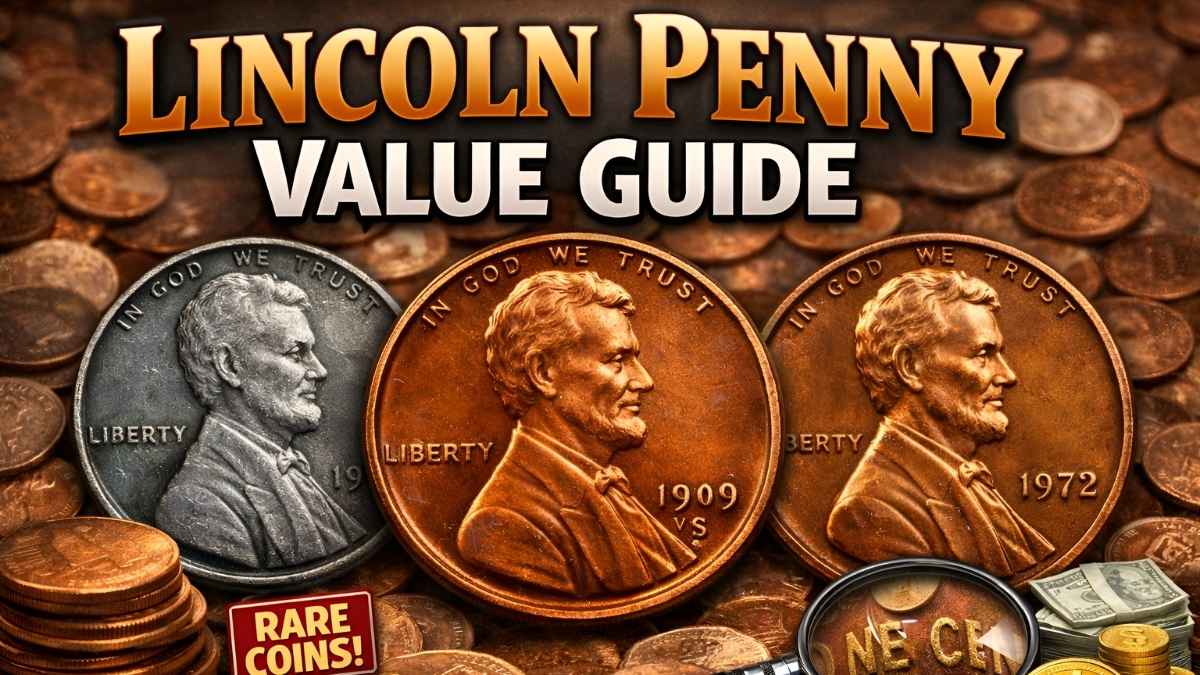
Lincoln Penny Value Guide: The Lincoln penny, first minted in 1909, remains one of the most iconic coins in American numismatics. Designed by Victor David Brenner, it features Abraham Lincoln’s portrait on the obverse and has undergone several reverse designs over the decades. From the Wheat reverse to the Memorial and Shield designs, the coin has carried forward Lincoln’s legacy for more than a century. While most pennies are common and circulate at face value, certain rare varieties and mint errors have become legendary treasures.
Why Collectors Value the Lincoln Penny
Collectors prize Lincoln pennies for their historical significance, design, and rarity. Early issues with low mintages, unusual mint marks, or dramatic errors can command extraordinary prices. The coin’s connection to Lincoln and its long production run make it a cornerstone of many collections.
The 125,000 Dollar Discovery Behind a Wall Clock
One of the most astonishing stories in coin collecting involves a Lincoln penny discovered hidden behind a wall clock. This coin, identified as a rare variety, was later sold for 125,000 dollars at auction. Its extreme rarity, pristine condition, and unusual discovery elevated it to one of the most valuable coins ever recorded. The story highlights how treasures can be found in unexpected places, reminding collectors that rare coins are sometimes closer than they think.

Types of Rare Lincoln Penny Varieties
Several varieties and errors make Lincoln pennies especially valuable:
- 1909 S VDB: The famous first-year issue with designer initials, extremely rare.
- 1914 D: A low-mintage coin from Denver, highly sought after.
- 1922 No D: A variety missing the Denver mint mark, prized by collectors.
- 1943 Copper Penny: Mistakenly struck in copper instead of steel, one of the most famous U.S. coin errors.
- Doubled Die Errors: Doubling visible on lettering or design elements.
Auction Price Highlights
While most Lincoln pennies trade for modest sums, rare varieties have achieved extraordinary prices. The reported 125,000 dollar discovery demonstrates the potential hidden value in circulation and collections. Other notable sales include six-figure results for 1943 copper pennies and 1909 S VDB examples in high grade.
Value Chart for Lincoln Pennies
Here is a simplified chart showing approximate values for notable varieties:
| Coin Type | Typical Value | High-Grade / Error Value |
|---|---|---|
| Standard Circulation Issue | $0.01 – $1 | $5 – $50+ |
| 1909 S VDB | $700 – $1,500 | $5,000 – $50,000+ |
| 1914 D | $200 – $1,000 | $10,000 – $100,000+ |
| 1922 No D | $500 – $2,000 | $20,000 – $75,000+ |
| 1943 Copper Penny | $100,000+ | $500,000 – $1,500,000+ |
| Dramatic Error Coin | $1,000 – $10,000 | $20,000 – $125,000+ |
Values vary depending on rarity, condition, and market demand, but this chart highlights the extraordinary fortune tied to Lincoln pennies.
The Role of Condition and Grading
Condition plays a critical role in determining value. Coins are graded on a scale from Poor (P-1) to Mint State (MS-70). A rare Lincoln penny in circulated condition may be worth modest sums, while the same coin in Mint State or Proof condition can be worth thousands or even millions. Professional grading services provide authentication and standardized evaluation, ensuring confidence for buyers and sellers.
Hidden Treasures in Everyday Life
The story of the 125,000 dollar Lincoln penny found behind a wall clock proves that hidden treasures can still be discovered in unexpected places. Many people overlook pennies, assuming they are ordinary coins. However, sharp-eyed collectors know that certain mint marks and varieties can be worth fortunes. Searching coin rolls, jars, inherited collections, and even forgotten hiding spots can yield surprising discoveries.
Market Trends in 2026
In 2026, Lincoln pennies continue to attract strong interest. Auction results show steady demand, with rare varieties setting records. Common examples trade close to face value, but rare issues like the 1943 copper penny and dramatic errors remain popular among collectors. The market reflects the enduring appeal of these historic coins.
Tips for Collectors
For those interested in collecting Lincoln pennies, here are some practical tips:
- Learn to identify key varieties such as the 1909 S VDB and 1943 copper penny.
- Inspect coins carefully for errors or unusual features.
- Store coins in protective holders to preserve condition.
- Consider professional grading for rare or high-quality examples.
- Follow auction results and dealer listings to stay informed about current values.
Conclusion
The Lincoln penny is more than just currency. It is a symbol of history, artistry, and rarity. Whether worth a single cent or hundreds of thousands, each coin tells a story that connects generations and preserves the legacy of American coinage. For collectors, the thrill lies in discovering hidden treasures and appreciating the beauty of coins that were never meant to exist.